
After being seriously injured offshore or at sea, peace of mind can feel out of reach. We take on the stress, the calls, and the fight – so you can focus on healing.
After an offshore accident, employers and insurance companies are already working behind the scenes to protect their profits by suppressing claims and avoiding payouts.
Jones Act and maritime claims are complex, and one wrong move could cost you everything.
We’ve handled Jones Act and maritime cases for decades. When the waves rise, we don’t back down—and we never settle for less than our clients deserve. From the first call and beyond – we’ve got your back.


Thousands of injured offshore workers have turned to us after accidents — confused, in pain, and overwhelmed. We’ve guided them forward and recovered millions on their behalf.
We see your struggle. We hear your concerns. We understand what you’re going through.
Jury awarded $23 million after defective boat steering caused crash that killed 20-year-old college student.
Casino held liable after overserving drunk driver who caused fatal head-on crash in Cameron Parish.
Settlement reached to compensate the surviving family members of a man tragically killed in an oilfield explosion.
Settlement reached after offshore helicopter crash killed oil worker during takeoff from platform.
Settlement compensating two off-shore workers mentally scarred by an oil well explosion.
Jury awarded offshore worker after helicopter crash left him with permanent knee injury and inability to return to work.
We Review Your Case
Call us now for a Free Case Review. We’ll listen to your story, answer your questions, and explain your legal options at no cost to you.
We Take Over So You Can Heal
Once we agree to move forward, we handle everything — from medical treatment and insurance calls to deferring medical bills until your case is resolved.
We Advise You to Settle or Go to Trial
We prepare every case as if it’s going to trial. We’ll fight for a fair settlement, and if the other side won’t play fair, we’ll walk you through your options and keep you informed every step of the way.
We Review Your Case
Call us now for a Free Case Review. We’ll listen to your story, answer your questions, and explain your legal options at no cost to you.
We Take Over So You Can Heal
Once we agree to move forward, we handle everything — from medical treatment and insurance calls to deferring medical bills until your case is resolved.
We Advise You to Settle or Go to Trial
We prepare every case as if it’s going to trial. We’ll fight for a fair settlement, and if the other side won’t play fair, we’ll walk you through your options and keep you informed every step of the way.
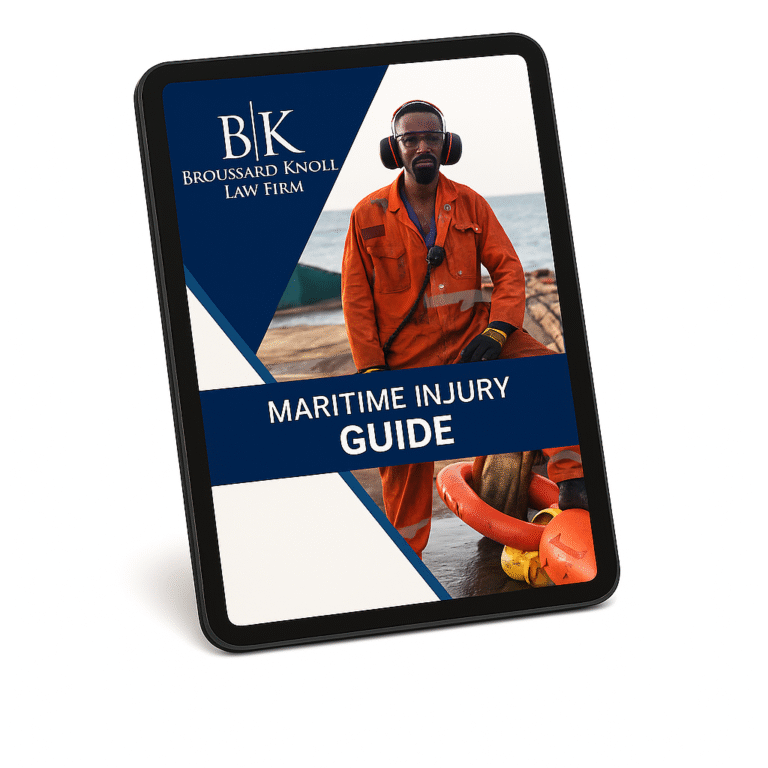
Our free PDF guide reveals what employers and insurance companies won’t tell you—and the steps you must take to protect your case.
Get Instant Access to the Guide. Your Information is Confidential.
After an offshore accident, it is essential to act quickly to protect your entitlement to compensation. Some steps you can take to protect your entitlement to compensation after an offshore accident include:
If you’ve been injured in an offshore accident, you likely have many unresolved questions regarding the compensation you can seek for your injuries.
Here are a few common questions:
– How will I pay my medical bills?
– How will I support my family?
– Do I have to accept what the insurance company is offering me?
The answers to these questions depend on several factors, such as the severity of your injuries, the circumstances surrounding the accident, and the specific laws that apply to your situation.
One type of compensation that you may be entitled to is called “maintenance and cure.” This is a form of compensation that is available to most maritime workers who are injured on the job. Maintenance and cure benefits are intended to cover your basic living expenses, including food, lodging, and medical care, while you are recovering from your injuries.
In addition to maintenance and cure, you may be able to seek compensation for other types of damages, such as lost wages, medical expenses, and pain and suffering. The specific types of damages that you can recover will depend on the details of your case.
Offshore accidents come in various types and have many potential causes. Unfortunately, many of these injuries are a result of negligence on the part of the offshore company or improperly trained employees running the rigs.
Slippery decks, carelessness, and faulty safety equipment are just a few examples of the hazards that can lead to serious injuries or even death. It is important to remember that the company has a duty to provide a safe working environment for all employees, and if they fail to do so, they need to be held accountable.
Working at sea comes with a host of dangers, and seamen face some of the most hazardous working conditions in the country. From injuries on workboats to accidents on oil platforms, offshore workers must navigate a multitude of risks every day.
If you have been injured in an offshore accident, it is crucial to seek the help of an experienced offshore injury attorney who can help you understand your legal options and fight for the compensation you deserve.
Offshore accidents can cause a variety of injuries, some of which can be life-changing. The following are some of the most common injuries suffered in offshore accidents:
It’s important to seek medical attention after an offshore accident, even if you don’t feel any immediate pain or symptoms. Some injuries may not be apparent right away and can worsen over time without proper treatment.
When an offshore accident occurs, companies often act immediately to try to protect themselves rather than do the right thing for their employees. They may bring in teams of lawyers and investigations to intimidate you and make it seem as though it was your fault that the accident occurred and not due to any negligence on their part.
It is a stressful situation and they may ask high-pressure questions to try and avoid responsibility for your injuries. If you’re not familiar with them, then you can be taken advantage of. At Broussard Knoll Law Firm, we have the experience to handle these cases.
When you choose Broussard Knoll Law Firm, you’ll receive a comprehensive and personalized approach to your offshore accident case, including:
We understand that recovering from an offshore accident can be difficult and stressful. That’s why we’re here to help you through the legal process and take control to get you every cent you deserve.
Many offshore accidents lawsuits fall under the Jones Act. The Jones Act is an admiralty law that allows injured seaman to file a claim against their employers and recover compensation for injuries suffered while working aboard a vessel.
The Jones Act covers crew members of any description who have an employment-related connection to a vessel in navigable waters. For instance, some of the many job titles covered under the Jones Act are deckhands, masters, captains, officers, engineers, divers, fish processors, cooks, and crew members.
Additionally, job positions that contribute to the vessel’s function, such as a drilling hand on a jack-up oil rig are also covered under the Jones Act. Whether your accident took place on an oil rig, submersible rig, jack-up rig, tugboat, or any other vessel, we can help you.
Yes, an independent contractor can also sometimes be viewed as an employee under the Jones Act.
Not necessarily: a seaman may be protected by the Jones Act even if he or she is temporarily working elsewhere, even on shore, as long as the work was “in the service of the ship.”
A Jones Act lawyer is knowledgeable regarding what constitutes “unseaworthy” conditions on board a vessel and understands the ramifications of “negligence” for your employer. Your description of defective equipment, inadequate crew, or unsafe conditions onboard will allow Counsel to assess unseaworthy conditions as a claim.
Defining inferior equipment, unsafe work conditions not corrected, or inadequate medical treatment after an injury will be effective in evaluating a negligence charge. Proof must be offered for the claim of injury due to unseaworthiness or negligence under the Jones Act, so it is vital that you identify witnesses for corroboration.
When a maritime worker suffers a serious injury at sea as a result of his or her employer’s negligence, the Jones Act requires the employer to pay the worker’s living expenses and medical bills (referred to in a settlement contract as “maintenance and cure”) until the maritime worker is recovered.
Employers often fight Jones Act work injury cases by claiming the injured worker did not qualify as a seaman or that the ship or offshore oil rig was not a vessel. Or they offer unreasonably low amounts for maintenance and cure.
The offshore attorneys at Broussard Knoll Law Firm, understand the tricks employers use to try to deny benefits to injured seamen. We have the experience you need to challenge an employer if you or a member of your family suffered a serious or fatal injury.
A Jones Act claim must be brought within three years of the injury, in federal court or state court. Your Jones Act lawyer will decide where to file the claim in order to recover maximum compensation for you.